There’s something satisfying about watching rain fall and knowing it doesn’t all have to disappear down the nearest drain. For centuries, people have collected rainwater for practical reasons, and today that simple idea is making a strong comeback. Whether the goal is reducing household water use, supporting a garden through dry months, or creating a more sustainable home, harvesting rainwater has become an appealing option for many homeowners.
Of course, collecting rainwater is only part of the story. The real value comes from making sure that stored water stays as clean and usable as possible. Leaves, dust, pollen, bird droppings, and tiny bits of debris can all find their way into a collection system long before the water reaches a storage tank.
That’s why a thoughtful filtration strategy matters just as much as the tank itself.
Rainwater Is Naturally Valuable, but It Still Needs Care
Rain begins its journey relatively clean, but it rarely reaches your storage system untouched.
As water flows across rooftops and into gutters, it gathers whatever happens to be in its path. Twigs, insects, dust, roof particles, and organic material can all become part of the collection process.
None of this means rainwater collection is a bad idea. Quite the opposite.
It simply highlights why every successful rainwater system includes steps to protect water quality before storage and before use.
The cleaner the water entering the system, the easier it becomes to maintain over time.
The First Stage Often Makes the Biggest Difference
Many homeowners focus on storage tanks or pumps, yet one of the most important parts of the entire setup comes much earlier.
Rainwater pre-filtration removes larger debris before water enters the storage tank. Mesh screens, leaf filters, first-flush diverters, and other simple devices help keep unwanted material out of the system from the very beginning.
This early protection reduces sediment buildup inside the tank, helps preserve pumps and downstream equipment, and makes ongoing maintenance much easier.
Think of it like sweeping your floor before mopping it. Removing larger debris first improves everything that follows.
Sometimes the simplest components have the greatest long-term impact.
Every Household Has Different Water Goals
Not every rainwater collection system is designed for the same purpose.
Some homeowners collect rainwater exclusively for irrigation.
Others use it for washing vehicles, cleaning outdoor surfaces, or supplying decorative water features.
In some situations, and only where local regulations and proper treatment allow, harvested rainwater may be prepared for additional household uses.
Because intended uses vary so much, no single filtration setup works for everyone.
Understanding how you plan to use the water helps determine which treatment stages make the most sense.
Building a Reliable Treatment Process
Once larger debris has been removed, the focus shifts toward improving overall water quality.
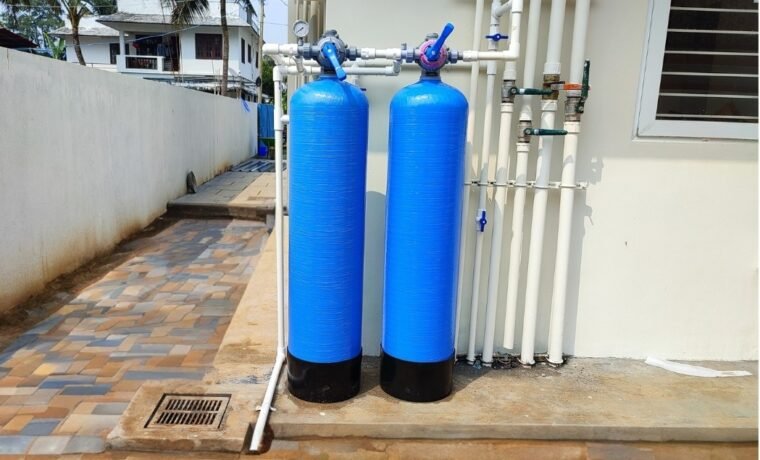
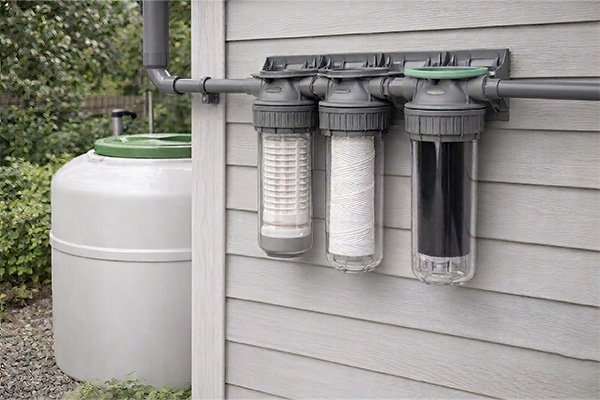
Effective filtration and treatment often involves several stages working together rather than relying on a single filter.
Sediment filters remove smaller particles.
Activated carbon may help improve taste or reduce odors where appropriate.
Depending on intended use, additional technologies such as ultraviolet treatment or specialized purification methods may also be included.
Each stage contributes something different, creating a more complete treatment process rather than expecting one filter to solve every challenge.
That’s one reason professionally designed systems often perform more consistently over the long run.
Maintenance Is Easier Than Many People Expect
People sometimes assume rainwater systems require constant attention.
In reality, routine maintenance is usually straightforward.
Cleaning gutters.
Checking inlet screens.
Removing accumulated leaves.
Replacing filters according to schedule.
Inspecting storage tanks occasionally.
These simple habits help maintain good performance while preventing small issues from becoming larger ones.
Like maintaining a garden or servicing a lawn mower, regular care becomes part of the normal rhythm of homeownership.
Why Water Storage Matters
Even excellent filtration cannot completely compensate for poor storage practices.
A well-designed storage tank helps protect collected water from sunlight, insects, excessive heat, and unnecessary contamination.
Keeping tanks sealed while ensuring proper ventilation reduces many common problems before they develop.
Tank location also matters.
Shaded areas often help reduce excessive warming during hot weather, while stable foundations support long-term durability.
Attention to these details contributes significantly to overall water quality.
Choosing the Right Filtration System
The phrase rainwater filtration covers a surprisingly wide range of equipment.
Simple systems designed for irrigation may require only basic debris removal.
More advanced applications often involve multiple filtration stages designed around the intended use of the collected water.
Rather than choosing equipment based solely on price or popularity, homeowners benefit from considering practical questions.
How much rainwater will be collected?
What will the water be used for?
How much maintenance feels reasonable?
Will seasonal weather affect collection volumes?
Answering these questions usually leads to a more effective and economical system than simply purchasing the largest filter available.
Sustainable Choices Add Up Over Time
One of the most rewarding aspects of rainwater collection is that small efforts create meaningful long-term results.
Every gallon collected reduces demand on traditional water supplies.
Gardens continue thriving during dry periods.
Outdoor cleaning becomes more efficient.
Families become more aware of how valuable water truly is.
These benefits may seem modest individually, yet together they support more sustainable household habits year after year.
Sometimes environmental responsibility doesn’t require dramatic lifestyle changes.
It simply begins with making smarter use of resources already available.
Better Planning Creates Better Results
The success of any rainwater system depends less on expensive equipment and more on thoughtful planning.
Starting with quality collection surfaces.
Protecting stored water from contamination.
Choosing appropriate filtration stages.
Maintaining the system consistently.
Each decision contributes to better long-term performance.
Skipping early planning often creates unnecessary maintenance later.
A well-designed system, by contrast, quietly does its job with very little attention.
Every Drop Deserves a Purpose
Rainwater has always been a valuable natural resource, yet modern homeowners have more opportunities than ever to use it wisely.
With proper planning, sensible filtration, and routine maintenance, collected rainwater can support gardens, outdoor cleaning, landscaping, and many other practical household needs while reducing reliance on traditional water supplies.
At the end of the day, successful rainwater harvesting isn’t really about installing the biggest tank or the most advanced filter.
It’s about understanding how every part of the system works together.
From removing leaves before they reach storage to maintaining clean filters throughout the year, every small step contributes to better performance.
And perhaps that’s the real lesson.
Good water management isn’t built around one piece of equipment.
It’s built around thoughtful choices that protect a resource we depend on every single day—one rainfall at a time.