Choosing the right countertop materials can influence how a kitchen or bathroom looks, functions, and holds up over time. With options ranging from natural stone to engineered surfaces, homeowners have more choices than ever. For homeowners considering modern surface solutions, Hyundai L&C offers materials designed to support both aesthetic preferences and practical needs.
The best countertop is not necessarily the most expensive or visually striking option. It is the one that fits the room, lifestyle, maintenance expectations, design goals, and long-term use.
What to Consider When Comparing Countertop Materials
Countertops are working surfaces. They may come into contact with food, water, heat, cleaning products, cookware, and everyday spills. For that reason, appearance should be only one factor in the decision.
Before selecting a surface, consider these key questions:
- How frequently will the countertop be used?
- How much maintenance are you willing to perform?
- What level of stain and moisture resistance do you need?
- Which colors, patterns, and finishes suit the space?
- Does the material work with the intended countertop design and installation?
Answering these questions can narrow the choices and prevent homeowners from selecting a surface based solely on appearance.
Popular Countertop Materials for Modern Interiors
Different countertop surfaces offer different combinations of durability, appearance, maintenance, and fabrication possibilities. Understanding the characteristics of each category makes comparison easier.
Quartz Countertops
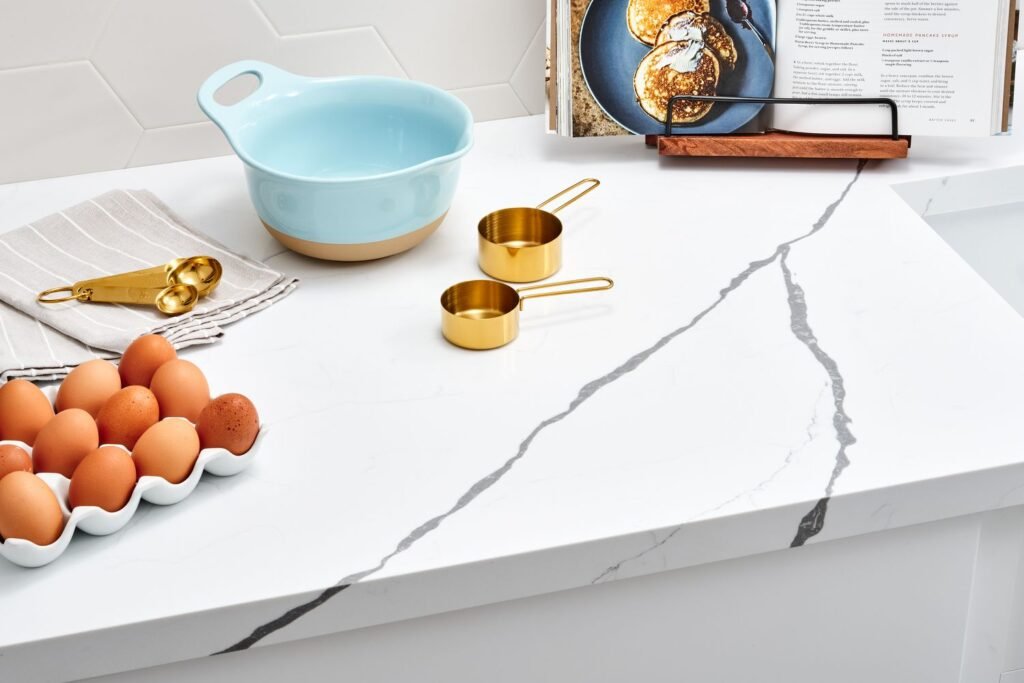
Quartz countertops are engineered surfaces made using quartz-based materials combined with resins and other components. They are widely considered for kitchens and bathrooms because they offer consistent designs and practical surface characteristics.
One major advantage is design flexibility. Quartz can be manufactured in a wide range of colors and patterns, including styles that resemble natural stone. This makes it possible to achieve a sophisticated stone-inspired appearance while maintaining a more consistent visual pattern.
Quartz is also generally nonporous, which can make routine cleaning straightforward. Homeowners should still follow the manufacturer’s care recommendations, particularly when dealing with heat, abrasive cleaners, or harsh chemicals.
Natural Stone Countertops
Natural stone remains a popular choice for homeowners who want distinctive patterns and organic character. Granite and marble are two familiar examples.
Because natural stone forms through geological processes, each slab can have its own mineral composition, veining, color variation, and visual movement. This individuality can become an important part of a kitchen or bathroom’s design.
However, natural stone surfaces may have specific maintenance requirements depending on the material. Some stones benefit from periodic sealing, and homeowners should understand how the selected stone responds to moisture, staining, acids, and everyday wear before installation.
Solid Surface Countertops
Solid surface materials are another option for residential and commercial interiors. These engineered surfaces can provide a uniform appearance and are available in numerous colors and patterns.
One of their notable characteristics is fabrication flexibility. Depending on the product, solid surface can be shaped and joined to create a relatively seamless appearance. This can be particularly useful for projects involving integrated sinks, curved details, or customized designs.
Because different products have different performance specifications, homeowners should review the manufacturer’s recommendations before choosing a solid surface for a particular application.
Porcelain and Other Engineered Surfaces
Porcelain and other engineered countertop materials have gained attention for their design versatility and performance characteristics. These surfaces can offer sophisticated patterns and finishes that complement contemporary interiors.
Their suitability depends on factors such as thickness, fabrication method, installation requirements, and intended use. Professional fabrication and installation are especially important when working with large-format or thinner slabs.
Countertop Materials Should Match Your Lifestyle
A kitchen used several times a day has different requirements from a lightly used guest bathroom. The ideal surface should reflect how the room actually functions.
For busy kitchens, homeowners may prioritize stain resistance, ease of cleaning, durability, and practical maintenance. A family that frequently prepares meals may have different needs than someone who primarily uses the kitchen for occasional cooking.
Bathrooms introduce another consideration: moisture. Countertops around sinks and faucets should be appropriate for an environment where water exposure is routine.
Outdoor or high-exposure applications require additional evaluation. Temperature changes, direct sunlight, moisture, and environmental conditions can affect material suitability, so not every countertop surface is appropriate for every location.
How Countertop Materials Affect Kitchen Design
Countertops occupy a significant visual area, meaning the selected material can influence the character of an entire kitchen.
For a minimalist space, a surface with subtle movement can maintain a clean appearance without making the room feel sterile. In a more traditional kitchen, pronounced veining or natural variation can create a stronger focal point.
Color also matters.
Light-colored countertops can contribute to an open, airy appearance, while darker surfaces can create contrast against lighter cabinetry. Warm neutrals may complement wood finishes, whereas cool grays can work well with contemporary cabinetry and metal fixtures.
Pattern scale should also be considered. A dramatic surface may look impressive on a large island but could feel visually overwhelming in a smaller kitchen.
Maintenance Matters as Much as Appearance
A beautiful countertop becomes less appealing when its maintenance requirements do not fit the homeowner’s routine.
Before purchasing, ask what the material requires for everyday care. Some surfaces may need only routine cleaning with an appropriate household cleaner, while others may require more specific maintenance procedures.
Homeowners should also find out:
- Which cleaners are safe to use
- Whether the surface requires sealing
- How it responds to acidic or abrasive substances
- How heat exposure should be managed
- Whether scratches or damage can be repaired
- Which cleaning methods the manufacturer recommends
Following product-specific care instructions is important because countertop performance depends not only on the material itself but also on how it is used and maintained.
Countertop Materials and Heat Resistance
Heat exposure is an important consideration in kitchens. Hot cookware, baking dishes, and appliances may come into contact with the work surface during everyday cooking.
However, homeowners should never assume that a countertop is completely heat-proof simply because it is marketed as durable. Heat resistance varies among materials and products, and sudden temperature changes can present additional risks.
Using trivets or heat pads is a simple precaution that can help protect the surface. Always consult the manufacturer’s care and use guidelines for information specific to the selected product.
Think Beyond the Countertop Slab
Selecting a material is only part of creating a successful countertop installation. The edge profile, thickness, backsplash, sink configuration, seams, and cabinetry can all affect the finished result.
The countertop’s pattern should also be considered in relation to the size and layout of the slab. Highly veined materials may require careful planning to achieve an attractive visual flow across an island or along a long countertop run.
Professional fabrication can help account for these details before installation begins. Accurate measurements and appropriate support are especially important for larger surfaces, cutouts, overhangs, and areas surrounding sinks or cooktops.
A Practical Checklist for Choosing Countertop Materials
If you are comparing several options, use this checklist before making a final decision:
1. Define the application.
Determine whether the countertop is intended for a kitchen, bathroom, laundry room, commercial space, or another environment.
2. Evaluate daily use.
Think about cooking frequency, food preparation, moisture exposure, cleaning habits, and the likelihood of spills or heavy use.
3. Compare maintenance requirements.
Look beyond general durability claims and identify the actual care routine recommended for each surface.
4. Review design options.
Compare colors, patterns, finishes, veining, slab dimensions, and edge options against the overall interior design.
5. Check performance characteristics.
Consider stain resistance, moisture resistance, scratch resistance, heat tolerance, and other relevant product specifications.
6. Confirm fabrication requirements.
Make sure the chosen material is appropriate for the planned sink cutouts, edges, seams, thickness, and installation details.
7. Follow manufacturer guidance.
Product specifications and care recommendations should always take priority over general assumptions about a material category.
The Best Countertop Is the One That Fits the Project
There is no universal winner among countertop materials. Quartz may appeal to homeowners seeking consistent patterns and convenient maintenance. Natural stone may be preferred for its individual character, while solid surface can be attractive for projects requiring fabrication flexibility.
The right decision comes from balancing appearance with actual performance requirements.
Instead of beginning with the question, “Which countertop is best?” start with, “Which countertop works best for this space and how it will be used?”
That shift makes the selection process more practical. By considering durability, maintenance, design, installation requirements, and everyday habits together, homeowners can choose a countertop that looks appropriate while supporting the demands of the room for years to come.
For additional information about modern surface options and product solutions, visit the official Hyundai L&C website and review the available materials, designs, and specifications before beginning your next countertop project.