
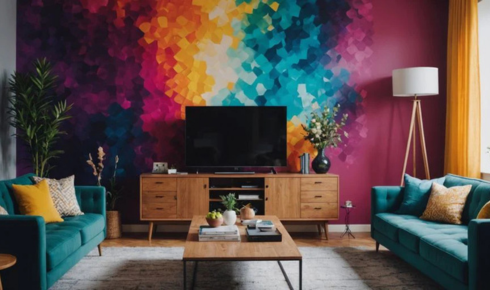
Why is it useful to test paint samples near corners and not just on a flat wall?

Corners, edges and areas near ceilings or windows catch light differently from big flat sections. Shadows, reflected colours from floors and furniture, and window light angles can all slightly shift how a paint tone looks.

If you only test a sample in one central patch, you may be surprised later that in corners it appears darker, or near a window it looks more intense. Painting a few small patches in different spots—near a corner, by a window, behind where a sofa will go—gives a more honest preview.

Paint is one of the cheapest changes in theory, but still a pain to redo immediately. Better to experiment on a few square inches than repaint four whole walls.

How can planning furniture layout on paper first prevent impulse purchases that don’t fit the room?

It’s easy to fall in love with a sofa or bed in a showroom. Under those big lights and open space, everything feels like...

What difference does placing lamps at different heights—floor, table and wall—make to evening ambience?

Overhead lights alone can make evenings feel harsh, like you’re in an office or showroom. The light comes from one flat plane and washes...

How can choosing a limited colour palette across rooms quietly tie the whole home together?

When every room has totally different colours and styles—red here, neon there, dark wood one side, shiny white the other—the home can feel like...

Expose your thoughts